Hotel Management College in Kolkata, Kalyani – DSHM India

Hotel Management

Hotel management students attending classroom training to build hospitality skills in front office, housekeeping and food and beverage service.
Hotel Management

No Time for a 3-Year Degree? A Short-Term Hotel Management Course Can Still Open Big Career Doors

You heard about this “Time is Money.” If you want to save time and learn the best skills, why spend years stuck in a classroom when you could dive straight into action?  Step into hands-on training, master practical techniques, and enter the professional world confident and ready. With real-world exposure, insider tips, and expert guidance, you’ll gain career-ready skills faster than you ever thought possible.  This blog will help you explore how a short-term hotel management course can open big career opportunities. What Makes a Short-Term Course Career-Ready Not all short-term courses are equal. A truly career-ready program focuses on practical hotel management training with industrial training, ensuring students are not just studying theory but gaining hands-on experience. Focused Practical Training Modules A high-quality diploma program equips students with the necessary skills to work in multiple areas of a hotel or restaurant. Below is a sample of what students learn: Module Duration Key Skills Learned Front Office Operations 2 months Guest handling, check-in/out, reservation systems Housekeeping 1.5 months Room maintenance, hygiene, and inventory management Food & Beverage Service 2 months Restaurant service, etiquette, and customer service Communication & Grooming 1 month Professional communication, personality development Industrial Exposure and Real-World Experience Reading about hospitality is one thing; doing it is another. Dive in, get practical exposure, and see your career-ready skills grow in real time. Industrial training is crucial. Students get firsthand experience in hotels, restaurants, and resorts. It allows them to understand operations, teamwork, and guest handling.   Exposure to real scenarios enhances confidence and prepares students for professional challenges. Skill Development in Front Office, Housekeeping, and F&B Apart from theoretical knowledge, students develop practical skills including: Guest complaints handling Room preparation and maintenance Table setting and food service etiquette Communication and teamwork This combination ensures that students are not just qualified but job-ready. With real-world practice and hands-on training, they step into jobs confident, capable, and ready to impress.  Course Curriculum: What Students Will Learn A short-term hotel management course is carefully designed to cover multiple facets of the industry. Front Office Operations and Guest Handling Students learn check-in/check-out procedures, reservation systems, handling guest queries, and maintaining records. These skills form the foundation of hospitality management. Housekeeping Management Basics Understanding room hygiene, maintenance, inventory control, and workflow management is essential. Proper housekeeping ensures guest satisfaction and smooth hotel operations. Food & Beverage Service Training From restaurant service etiquette to food presentation, students learn the art of managing dining experiences. This includes handling orders, table setting, and customer service. Communication, Grooming, and Personality Development Professional communication and proper grooming are critical in hospitality. Short-term courses focus on enhancing interpersonal skills, presentation, and customer interaction. Career Opportunities After a Short-Term Diploma Choosing a short-term course at a hotel management college in Kalyani like Dolphin School of Hotel Management can help students move from classroom learning to real hospitality exposure faster. With practical skills, industry insights, and hands-on training in front office, housekeeping, food and beverage service, and guest handling, the course prepares students to step into entry-level roles with confidence from day one. Roles in Hotels and Resorts Short-term diploma holders have a variety of opportunities in hotels and resorts. You could start as a  Front office executive, Greeting guests  Managing reservations and ensuring a smooth check-in experience. For those who enjoy interacting with people, guest relations roles provide the chance to resolve queries, organise services, and make every visitor feel special. Roles in Food & Beverage Service Short-term hotel management courses also prepare students for careers in restaurants, banquet halls, and catering services. Students learn how to serve guests professionally, set up dining arrangements, and maintain high standards of food and beverage service. Starting as a server or service executive, consistent performance can lead to roles such as  Restaurant supervisor  F&B manager Career Growth Pathways Even in a short-term program, growth is tangible. Here’s a snapshot of possible career trajectories: Front Office Executive: Assistant Manager → Front Office Manager Housekeeping Associate: Supervisor → Housekeeping Manager Food & Beverage Service: Restaurant Supervisor → F&B Manager Guest Relations: Senior Executive → Guest Relations Manager This shows that a short-term diploma isn’t a limitation—it’s a launchpad. Students who combine their training with dedication, adaptability, and a willingness to learn from real-world experiences can achieve significant career progression. With every shift at a hotel, banquet, or restaurant, skills sharpen, confidence grows, and opportunities expand. The takeaway?  Even a short-term course can be a springboard to a successful career in hospitality. It equips students with  The practical know-how,  Exposure to real industry standards and  The ability to step into entry-level roles with confidence Short-Term Diploma vs 3-Year Degree: Which Path to Choose? Factor Short-Term Diploma 3-Year Degree Course Duration Usually completed within 1 year, helping students enter the hospitality industry faster. Takes 3 years and offers a longer academic learning journey. Learning Style Focuses more on practical hotel training, service skills, and job-ready knowledge. Covers detailed theory, management concepts, and advanced hospitality subjects. Best For Ideal for students who want early career exposure after Class 12. Suitable for students planning long-term managerial or corporate hospitality roles. Investment More affordable and time-saving compared to a full degree course. Requires higher financial and time commitment. Career Scope Opens roles in front office, housekeeping, food & beverage, and guest service. Offers wider opportunities in hotel chains, operations, and management departments. Fast-Track Your Hotel Career in Months Why wait years when you can dive straight into hospitality? A short-term course equips you with hands-on skills in front office, housekeeping, and F&B. Gain real-world exposure, boost your confidence, and become job-ready fast at Dolphin School of Hotel Management in Kalyani, a trusted hotel management college for pursuing a short-term course. For admission-related queries, contact 7797188188 | 7797433533. Enroll now  People Also Ask  Can a short-term hotel management course lead to high-paying jobs? Yes. While entry-level roles start with basic responsibilities in the front office, housekeeping, or F&B, consistent performance and experience can lead to supervisory and managerial positions in

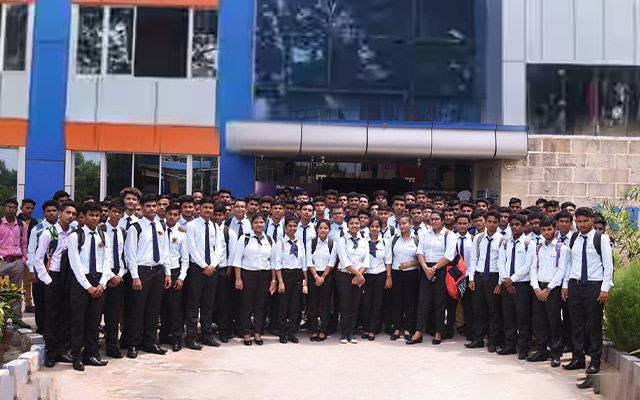
Hotel management students in uniform outside Dolphin School of Hotel Management, a low-fee hotel management college in Kolkata
Hotel Management

How to Find a Low-Course-Fee Hotel Management College Without Compromising Quality

A dream career should not begin with a “Wait… how much?” fee structure. Hotel management can open doors to hotels, airlines, cruise lines, resorts, and restaurants. But a big bill does not always mean big learning. Students need practical training, career guidance, and real industry exposure to build a strong future in hospitality. Those searching for hotel management colleges in Kolkata with low course fees can explore Dolphin School of Hotel Management. Here, in this blog, you will learn how to choose an affordable college without compromising quality and career growth. Why Do Students Look for a Low-Course-Fee Hotel Management College? Many students want to start a professional career soon after Class 12. Hotel management is a popular choice because it offers job opportunities in hotels, restaurants, resorts, cruise lines, airlines, event companies, and hospitality brands. However, course fees can often become a deciding factor. Families want an affordable hotel management college in Kolkata that offers good training without unnecessary financial pressure. Why Are Rising Education Costs After Class 12 a Concern? After Class 12, students often explore professional courses like hotel management, nursing, aviation, digital marketing, and business management. But many of these courses come with high fees. Why Do Students Need Skill-Based Career Options? Not every student wants a purely theory-based degree. Many students prefer a course that teaches them real workplace skills. Hotel management is a strong option because it teaches: Communication skills Guest handling Food production Front office operations Housekeeping management Food and beverage service Teamwork and leadership What Should You Check Before Choosing an Affordable Hotel Management College? Choosing a college is about more than just fees. Students need a college that provides practical training, exposure, and placement support. Course Recognition and Academic Credibility Check whether the college offers recognised courses. A structured and accredited program helps in: Job applications Higher education opportunities Industry credibility Questions to ask: Is the course structured properly? Is the curriculum industry-relevant? Does the college provide recognised degrees or certificates? Practical Training Facilities Hotel management requires hands-on experience. Look for colleges that provide: Kitchen and bakery training Food and beverage service practice Housekeeping training Front office simulations Grooming and communication sessions Dolphin School of Hotel Management in Kolkata, a college with low course fees, emphasises practical skills for real industry readiness. Experienced and Industry-Focused Faculty Faculty must guide students with real-world examples, not just textbook knowledge. Experienced teachers prepare students for interviews, practical challenges, and career progression. Transparent Fee Structure A clear fee structure is essential. Students should check: Tuition fees Admission charges Uniform costs Examination fees Practical lab charges Study material fees Internship-related charges Student Support and Career Guidance Quality colleges offer continuous support, including: Career counselling Interview preparation Grooming and professional behaviour sessions Placement guidance What Is Included in Hotel Management Course Fees? When researching fees, students should understand what the cost covers. Low fees are meaningful only if they include practical training, study materials, and career support. Fee Component What It Includes Why It Matters Tuition Fees Classroom learning, theory, and faculty guidance Builds academic foundation Practical Lab Fees Kitchen, bakery, front office, housekeeping training Develops hands-on industry skills Uniform Fees Formal and kitchen uniforms, grooming essentials Helps students follow industry standards Study Material Fees Notes, manuals, and reference materials Supports exam and practical preparation Examination Fees Internal and external assessments Required for course completion Internship Support Industry exposure and training Gains real workplace experience Placement Support Interview training and job assistance Prepares students for career entry Which Hotel Management Courses After 12th Offer Good Value? Compare course duration, fees, career scope, and practical training when exploring options. Diploma in Hotel Management Diplomas are often shorter and more affordable than degrees, making them ideal for students who want to enter the workforce quickly. They are suitable for roles in: Hotel operations Front office management Food production Restaurant service Housekeeping operations Bachelor’s Degree in Hotel Management A BHM provides deeper academic knowledge and supports long-term career growth. Students should compare curricula, training quality, and placement support. It is suitable for roles such as: Leadership positions in hotels Management roles in hospitality brands Operations manager Front office supervisor Food and beverage manager Available courses: BBA in Hotel Management Food Production and Culinary Courses Good for students passionate about cooking and kitchen operations. Career options include: Commis chef Kitchen trainee Bakery assistant Culinary associate Production staff Available courses: Diploma in Culinary Science, B.SC Culinary Science Food and Beverage Service Courses Teaches guest service, table setup, order management, and restaurant operations. Ideal for students with communication skills. Available course: Diploma in Food & Beverage Services Front Office and Hospitality Operations Courses Prepares students for reservations, check-ins, billing, and guest communication. Strengthens confidence in handling real clients. M.SC in Hospitality Management, B.SC Hospitality & Hotel Administration How Can You Identify Quality in a Low-Fee Hotel Management College? Quality in a low-fee hotel management college comes from strong training, skilled faculty, and good placement support. Training Infrastructure Check kitchens, classrooms, front office labs, and housekeeping training areas. A campus visit helps parents and students understand the environment. Placement Assistance Strong placement support includes: Interview preparation Resume guidance Internship tie-ups Industry connections Past placement records Internship Opportunities Internships provide real hotel experience, discipline, teamwork, and industry exposure. Without them, education remains theoretical. Course Curriculum Curricula should balance theory and practical skills. Check that it covers hotel operations, food production, service, housekeeping, and front office skills. Student and Alumni Feedback Alumni can give honest insights about faculty support, practical learning, placement assistance, and overall student experience. Why Is Practical Training Important in Hotel Management Education? In hotel management, learning by doing is crucial for building confidence and industry readiness. Internship Type Duration Skills Gained Potential Placement Hotel Kitchen Internship 1-3 months Culinary skills, Time management Chef, Kitchen staff Front Office Internship 1-2 months Communication, Reservation management Front Desk Executive, Guest Relations Event Management Internship 1 month Planning, Coordination Event Coordinator, Banquet Manager Restaurant Internship 1-2 months Service etiquette, F&B operations Restaurant Manager, Service Staff What

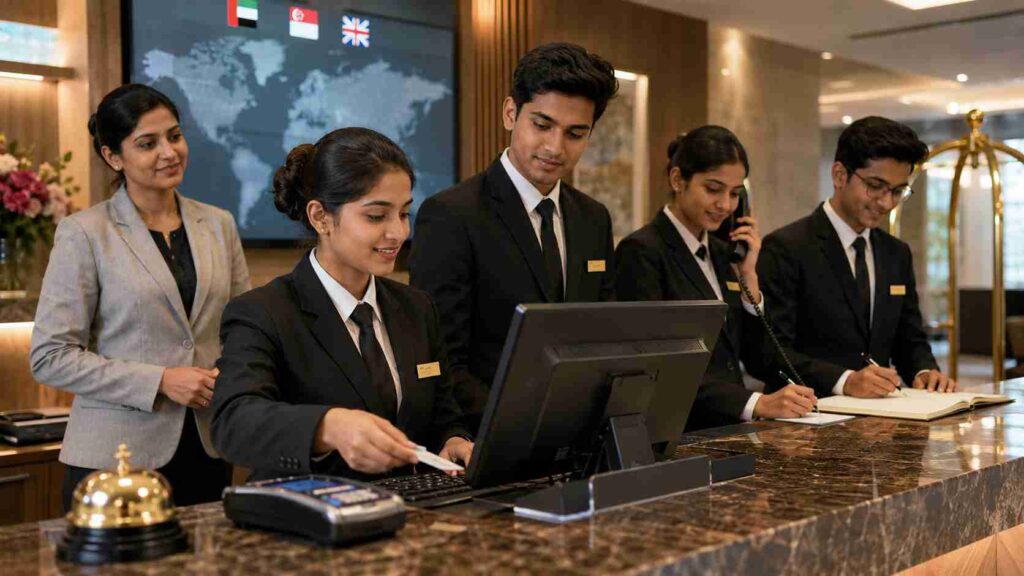
Hotel management students practising front office operations with faculty guidance in a modern hospitality training environment for global career opportunities
Hospital Management, Hotel Management

How to Choose the Best Hotel Management College for Abroad Placement (7 Key Factors)

Confused about which hotel management college will actually get you placed abroad? You’re not alone. India’s hospitality sector is scaling fast. Its contribution to GDP is projected to rise from US$256 billion in 2024 to US$523 billion by 2034, supporting around 63 million jobs, according to IBEF. More jobs also means more competition, so the college you choose matters more than ever. This guide breaks down the 7 factors that separate a college that talks about abroad placements from one that delivers them — especially if you’re evaluating options in West Bengal. Why Does the Right College Matter for a Global Hospitality Career? Not every hotel management college sends students abroad. Many only claim to. The gap between colleges is widest in three areas: curriculum, faculty exposure, and real placement tie-ups. India’s travel and hospitality sector is projected to see a 5.1% net employment change in the first half of FY2026-27, according to a TeamLease Employment Outlook Report covered by Asian Hospitality. That growth is real — but it only helps you if your college has the pipeline to place you into it. 7 Factors to Consider When Choosing a Hotel Management College for Abroad Placements 1. Does the Curriculum Include Global Exposure? A curriculum built only around Indian hospitality trends won’t prepare you for an international kitchen or front desk. Look for colleges that teach: International cuisines and service styles Case studies from global hotel chains Guest behaviour across cultures International service etiquette 2. What Is the College’s International Placement Record? Ask for numbers, not promises. How many students were placed abroad last year? Which countries did they go to? Which hotel brands hired them? Colleges with direct tie-ups to global hotel chains — like DSHM’s Diploma in Hospitality Management — tend to have stronger, more transparent records. 3. Is the Infrastructure Built to Industry Standards? Smart kitchens, automated housekeeping, and digital guest services are now standard in global hotels. Your training infrastructure should match that. Facility Why It Matters Training kitchens Hands-on cooking practice before internships Mock front office & reception labs Simulates real guest-facing roles Restaurant & bar simulation setups Builds F&B service confidence Bakery & confectionery labs Core skill for culinary specialisations Language & IT labs Needed for international guest communication 4. Does the Faculty Have International Industry Experience? Faculty who’ve worked in Indian and international hotel chains bring insight you can’t get from textbooks. They understand real hotel operations, guest crises, and protocols followed abroad. This is what turns a classroom lesson into interview-ready confidence. 5. Are There Enough Course and Specialisation Options? Hotel management careers stretch well beyond hotels — into cruise lines, resorts, and even hospital administration. A good college should offer both degree and diploma paths, such as: Diploma in Culinary Science Diploma in Food & Beverage Services BSc. in Hospitality & Hotel Administration BSc. in Culinary Science MSc. in Hospitality Management BBA in Hospital Management (For a full breakdown of what a master’s program covers, see our guide on top skills you’ll master in a hotel management master’s program.) 6. Does the College Train Soft Skills, Grooming, and Language? Technical skill gets you the interview. Soft skills get you the offer. Check whether the college includes: English and foreign language training Personality development workshops Interview and group discussion practice International etiquette and grooming sessions 7. Are There Internships, Industry Tie-Ups, and Study Tours? A college’s real-world connections show up in the quality of its internships. Ask if the college arranges internships with luxury brands, international study tours, or guest lectures from industry leaders. We cover why this matters more than classroom theory in our guide on practical exposure vs. theory. Quick Comparison Checklist: What to Ask Before You Enrol Factor Ask the College Curriculum Is it aligned with international hospitality standards? Placement record How many students placed abroad last year, and where? Infrastructure Are labs and kitchens updated to industry standards? Faculty Do they have international hotel experience? Course variety Are diploma and degree options both available? Soft skills Is grooming and language training part of the curriculum? Industry tie-ups Are there internships with 5-star or global brands? How DSHM Prepares Students for Abroad Placements DSHM is built around these exact 7 standards. Industry-ready infrastructure: modern hospitality labs, fully-equipped bakery, bar and kitchen setups, and realistic front office training zones that simulate real hotel environments. Courses that lead to global careers: live kitchen sessions, field training, and internships built into every program — from the Diploma in Hospitality Management to the M.Sc. in Hospitality Management. Placement beyond borders: DSHM’s placement cell has secured student placements across the UAE, Singapore, and Oman, with support for resume building, interview prep, and visa documentation. Want to see how DSHM compares on cost too? Read our guide on finding a quality hotel management education without breaking the bank. Make the Right Choice for Your Future Choosing a hotel management college is a decision that shapes the next decade of your career. Use the 7 factors — and the checklist table above — while you shortlist colleges. A college that ticks every box gives you a real shot at an international hospitality career, not just a domestic job. Talk to DSHM’s admissions team → FAQs Q1. Which countries hire hotel management graduates from India? UAE, Singapore, Oman, the UK, Canada, and Maldives are among the top destinations for Indian hotel management graduates, depending on the college’s placement tie-ups. Q2. Should I choose a diploma or a degree for an international career? Diplomas (usually 1 year) get you into entry-level international roles faster. Degrees (B.Sc./BBA/M.Sc., 3–4+ years) open the door to faster growth into management roles abroad. Q3. What kind of companies visit for campus placements? Reputed hotel chains, luxury resorts, cruise lines, and hospital management firms — both domestic and international — typically recruit through campus placement drives. Q4. Are internships mandatory? Yes. Industry internships are built into all major programs to ensure real-world, job-ready exposure. Q5. What’s the duration of diploma vs. degree programs?

Scroll to Top