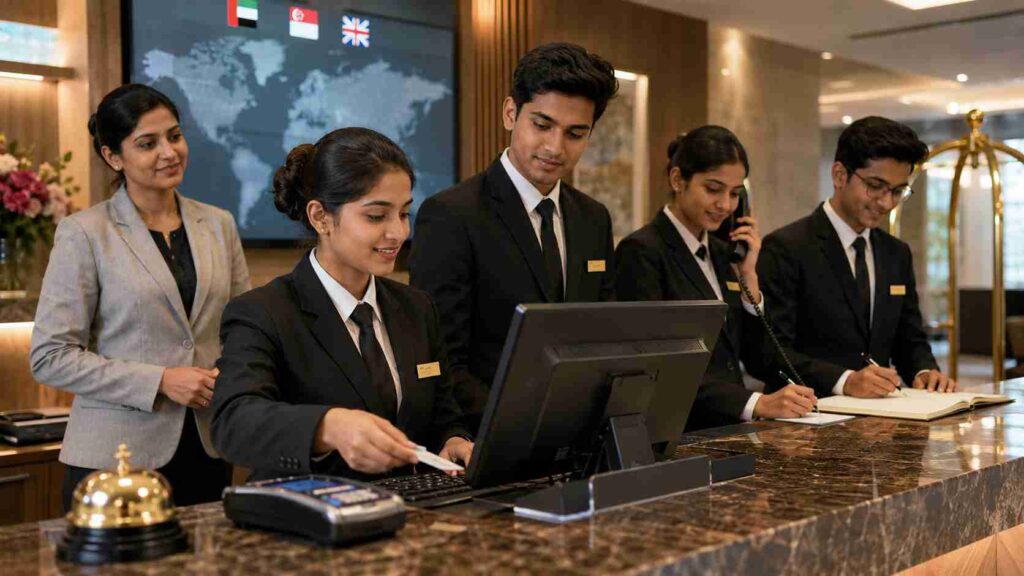
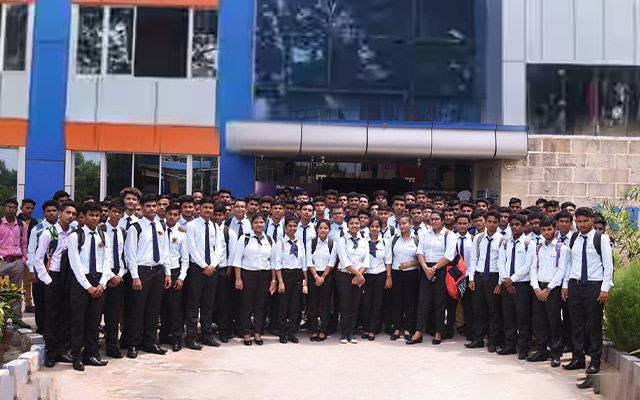
You heard about this “Time is Money.” If you want to save time and learn the best skills, why spend years stuck in a classroom when you could dive straight into action?
Step into hands-on training, master practical techniques, and enter the professional world confident and ready. With real-world exposure, insider tips, and expert guidance, you’ll gain career-ready skills faster than you ever thought possible.
This blog will help you explore how a short-term hotel management course can open big career opportunities.
What Makes a Short-Term Course Career-Ready
Not all short-term courses are equal. A truly career-ready program focuses on practical hotel management training with industrial training, ensuring students are not just studying theory but gaining hands-on experience.
Focused Practical Training Modules
A high-quality diploma program equips students with the necessary skills to work in multiple areas of a hotel or restaurant. Below is a sample of what students learn:
|
Module |
Duration |
Key Skills Learned |
|
Front Office Operations |
2 months |
Guest handling, check-in/out, reservation systems |
|
Housekeeping |
1.5 months |
Room maintenance, hygiene, and inventory management |
|
Food & Beverage Service |
2 months |
Restaurant service, etiquette, and customer service |
|
Communication & Grooming |
1 month |
Professional communication, personality development |
Industrial Exposure and Real-World Experience
Reading about hospitality is one thing; doing it is another. Dive in, get practical exposure, and see your career-ready skills grow in real time.
- Industrial training is crucial. Students get firsthand experience in hotels, restaurants, and resorts. It allows them to understand operations, teamwork, and guest handling.
- Exposure to real scenarios enhances confidence and prepares students for professional challenges.
Skill Development in Front Office, Housekeeping, and F&B
Apart from theoretical knowledge, students develop practical skills including:
- Guest complaints handling
- Room preparation and maintenance
- Table setting and food service etiquette
- Communication and teamwork
This combination ensures that students are not just qualified but job-ready. With real-world practice and hands-on training, they step into jobs confident, capable, and ready to impress.
Course Curriculum: What Students Will Learn

A short-term hotel management course is carefully designed to cover multiple facets of the industry.
Front Office Operations and Guest Handling
Students learn check-in/check-out procedures, reservation systems, handling guest queries, and maintaining records. These skills form the foundation of hospitality management.
Housekeeping Management Basics
Understanding room hygiene, maintenance, inventory control, and workflow management is essential. Proper housekeeping ensures guest satisfaction and smooth hotel operations.
Food & Beverage Service Training
From restaurant service etiquette to food presentation, students learn the art of managing dining experiences. This includes handling orders, table setting, and customer service.
Communication, Grooming, and Personality Development
Professional communication and proper grooming are critical in hospitality. Short-term courses focus on enhancing interpersonal skills, presentation, and customer interaction.
Career Opportunities After a Short-Term Diploma
Choosing a short-term course at a hotel management college in Kalyani like Dolphin School of Hotel Management can help students move from classroom learning to real hospitality exposure faster.
With practical skills, industry insights, and hands-on training in front office, housekeeping, food and beverage service, and guest handling, the course prepares students to step into entry-level roles with confidence from day one.
Roles in Hotels and Resorts
Short-term diploma holders have a variety of opportunities in hotels and resorts. You could start as a
- Front office executive,
- Greeting guests
Managing reservations and ensuring a smooth check-in experience. For those who enjoy interacting with people, guest relations roles provide the chance to resolve queries, organise services, and make every visitor feel special.
Roles in Food & Beverage Service
Short-term hotel management courses also prepare students for careers in restaurants, banquet halls, and catering services. Students learn how to serve guests professionally, set up dining arrangements, and maintain high standards of food and beverage service.
Starting as a server or service executive, consistent performance can lead to roles such as
- Restaurant supervisor
- F&B manager
Career Growth Pathways
Even in a short-term program, growth is tangible. Here’s a snapshot of possible career trajectories:
- Front Office Executive: Assistant Manager → Front Office Manager
- Housekeeping Associate: Supervisor → Housekeeping Manager
- Food & Beverage Service: Restaurant Supervisor → F&B Manager
- Guest Relations: Senior Executive → Guest Relations Manager
This shows that a short-term diploma isn’t a limitation—it’s a launchpad. Students who combine their training with dedication, adaptability, and a willingness to learn from real-world experiences can achieve significant career progression.
With every shift at a hotel, banquet, or restaurant, skills sharpen, confidence grows, and opportunities expand.
The takeaway?
Even a short-term course can be a springboard to a successful career in hospitality. It equips students with
- The practical know-how,
- Exposure to real industry standards and
- The ability to step into entry-level roles with confidence
Short-Term Diploma vs 3-Year Degree: Which Path to Choose?
|
Factor |
Short-Term Diploma |
3-Year Degree |
|
Course Duration |
Usually completed within 1 year, helping students enter the hospitality industry faster. |
Takes 3 years and offers a longer academic learning journey. |
|
Learning Style |
Focuses more on practical hotel training, service skills, and job-ready knowledge. |
Covers detailed theory, management concepts, and advanced hospitality subjects. |
|
Best For |
Ideal for students who want early career exposure after Class 12. |
Suitable for students planning long-term managerial or corporate hospitality roles. |
|
Investment |
More affordable and time-saving compared to a full degree course. |
Requires higher financial and time commitment. |
|
Career Scope |
Opens roles in front office, housekeeping, food & beverage, and guest service. |
Offers wider opportunities in hotel chains, operations, and management departments. |
Fast-Track Your Hotel Career in Months
Why wait years when you can dive straight into hospitality? A short-term course equips you with hands-on skills in front office, housekeeping, and F&B. Gain real-world exposure, boost your confidence, and become job-ready fast at Dolphin School of Hotel Management in Kalyani, a trusted hotel management college for pursuing a short-term course.
For admission-related queries, contact 7797188188 | 7797433533. Enroll now
People Also Ask
Can a short-term hotel management course lead to high-paying jobs?
Yes. While entry-level roles start with basic responsibilities in the front office, housekeeping, or F&B, consistent performance and experience can lead to supervisory and managerial positions in hotels, resorts, and restaurants, increasing earning potential over time.
How long does it take to complete a short-term hotel management course?
Most short-term courses are completed within 6 months to 1 year, depending on the institute and program structure. The focus is on practical training and industrial exposure to prepare students quickly for the hospitality industry.
Do short-term courses provide industrial training in hotels?
Absolutely. A quality short-term hotel management course includes industrial training in real hotels, resorts, or restaurants, allowing students to gain hands-on experience, learn operations, and develop professional skills before entering the workforce.
Which skills are covered in a short-term hotel management course?
Students learn front office management, housekeeping operations, food & beverage service, communication, grooming, and customer handling. These practical skills make them immediately job-ready in the hospitality industry.
Are short-term hotel management courses affordable compared to degrees?
Yes. They require lower financial investment while providing career-ready training. Students can access high-quality education, hands-on learning, and early industry exposure without the higher fees and longer duration of a 3-year degree.